Publishing a book feels overwhelming when you’re starting from scratch. The process seems complicated, expensive, and full of decisions you’re not qualified to make.
But professional book publishing follows a predictable path. Understanding the sequence prevents costly mistakes and wasted time working on the wrong things at the wrong stages.
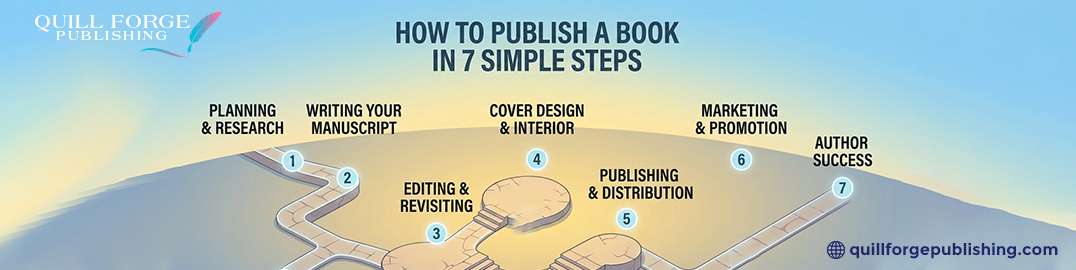
This self-publishing roadmap 2026 breaks down exactly what happens between finished manuscript and published book. No mystery. No confusion. Just clear steps that lead to professional results.
Whether you’re evaluating full-service book publishing company options or planning to coordinate services yourself, these seven steps apply universally. Choosing the right model is key; we recommend you Compare Hybrid Publishing vs. Self-Publishing before you start to ensure your chosen path aligns with your goals.
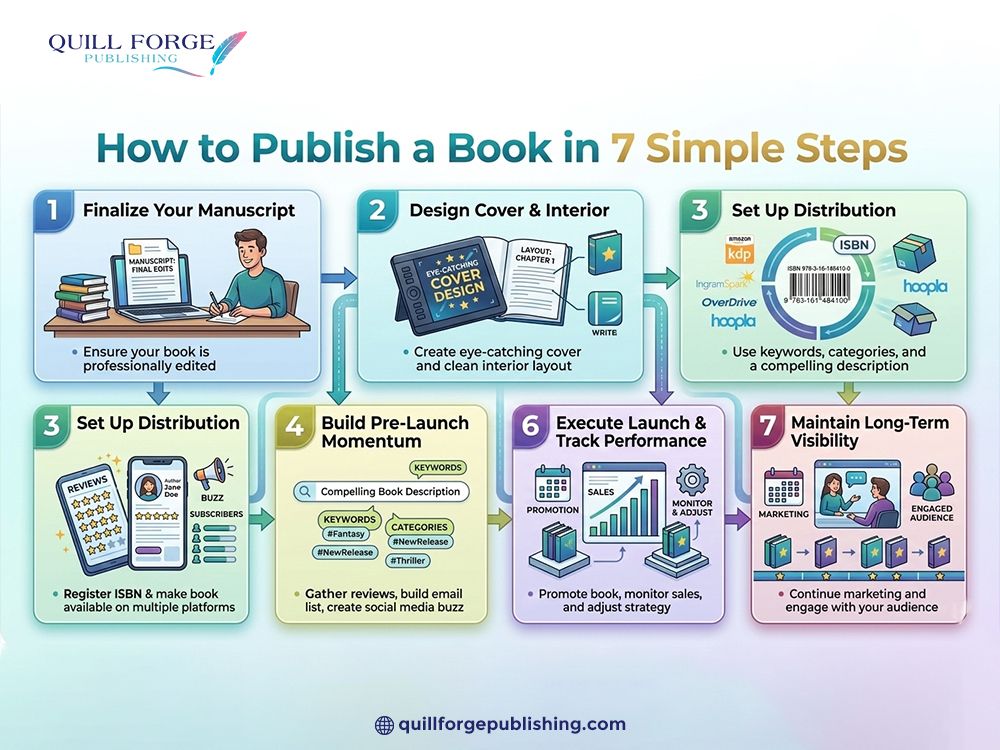
Step 1: Finalize Your Manuscript Through Professional Editing
Your manuscript isn’t finished when you type “The End.” It’s finished when professional editing ensures it meets publication standards.
Book editing and publishing services typically include three editing stages:
Developmental editing addresses big-picture issues like structure, pacing, character development, or argument flow. This happens first and can involve significant rewrites.
Copy editing fixes grammar, punctuation, consistency, and sentence-level clarity. This refines your prose without changing the overall structure.
Proofreading catches final typos and formatting errors before publication. This is your last quality check.
Not every book needs all three stages. A well-structured business book might skip developmental editing and go straight to copy editing. A complex novel almost always benefits from comprehensive editing.
How to publish a book professionally starts with editing because everything that follows assumes your content is publication-ready.
Skipping or shortcutting editing to save money is a false economy. Poor editing shows in reviews and damages credibility permanently.
Step 2: Create Professional Cover and Interior Design
Readers judge books by their covers. They judge professionalism by interior design. Both matter enormously for credibility and sales.
Professional design includes:
Cover design that signals genre appropriately, stands out in thumbnail view, and positions your book competitively in its market.
Interior formatting with proper margins, typography, chapter headings, and page layout that creates a comfortable reading experience.
Multiple format files optimized for ebook, paperback, and hardcover with platform-specific technical requirements met.
Design happens after editing is complete because content length affects cover dimensions and interior pagination.
Self publishing book services either include design or coordinate with professional designers who understand current market aesthetics and technical specifications.
Amateur design signals amateur production regardless of content quality. Professional design opens doors to readers who might otherwise dismiss your book instantly.
Step 3: Set Up Distribution Through Proper Channels
Getting your book into retail systems requires more than just uploading files to Amazon.
Proper distribution setup includes:
ISBN registration under your name as publisher, not a platform’s free ISBN that limits distribution options.
Wholesale distribution through Ingram or similar services that supply bookstores and libraries.
Multiple platform presence including Amazon, Apple Books, Barnes & Noble, Kobo, and others.
International availability ensuring readers worldwide can access your book.
Proper pricing with discount structures that make your book viable for retail stocking.
Book publishing services in the USA that understand distribution ensure your book is accessible through all major channels, not just Amazon’s ecosystem.
Distribution infrastructure determines whether your book can reach libraries, independent bookstores, and international markets or remains limited to single-platform availability.
Step 4: Optimize Metadata for Discoverability
Your book’s metadata tells retailer algorithms who should see your book and when to recommend it.
Critical metadata elements include:
Title and subtitle with strategic keywords that readers actually search.
Book description that converts browsers into buyers while satisfying algorithmic requirements.
Categories positioning your book where it can rank competitively and gain visibility.
Keywords expanding your book’s search presence across multiple terms.
Author bio establishing credibility and connecting readers to your other work.
Poor metadata means Amazon and other platforms don’t know who wants your book or when to surface it in recommendations.
Professional book marketing services for self-published authors include metadata optimization as foundational to all other promotional efforts.
Step 5: Build Pre-Launch Momentum Through Strategic Marketing
Launching without preparation wastes your most valuable promotional window.
Pre-launch marketing includes:
Advance review copies distributed to book bloggers, reviewers, and influencers in your genre.
Email list building so you have an audience ready to buy on launch day.
Social media presence establishing platforms where you’ll promote your book.
Launch team coordination recruiting readers who’ll buy, review, and share at launch.
Media outreach pitching yourself to podcasts, publications, and platforms your readers follow.
Hybrid publishing models for authors often include marketing support, but self-published authors coordinating independently need to handle this themselves or work with marketing specialists.
Launch momentum creates sales velocity that improves algorithmic visibility, which drives organic discovery that sustains sales beyond your initial promotional push.
Step 6: Execute Launch and Monitor Performance
Launch day isn’t the finish line. It’s the starting gun for ongoing promotion.
Effective launch execution includes:
Coordinated promotion across email, social media, and any advertising campaigns.
Review generation encourages early readers to post honest reviews quickly.
Performance monitoring, tracking sales, ranking, and identifying what’s working.
Quick adjustments based on early data about conversion rates and reader response.
Sustained promotion continuing marketing efforts beyond launch week.
Book publishing cost includes marketing budget because a professionally produced book without promotion rarely finds its audience organically.
Full-service book publishing company options typically bundle launch support with production services, ensuring coordination between technical publication and promotional execution.
Step 7: Maintain Long-Term Visibility Through Ongoing Marketing
Most authors treat book marketing as a launch event. Successful authors treat it as ongoing business development.
Long-term marketing strategies include:
Regular content creation keeps your author platform active and attracting new readers.
Speaking and event opportunities positioning your book as credential and promotional tool.
Advertising campaigns on Amazon, Facebook, or other platforms where your readers gather.
Awards and recognition building credibility that compounds over time.
Series development for fiction authors, or additional titles that cross-promote for nonfiction.
Book marketing services for self-published authors provide ongoing support rather than just launch campaigns, recognizing that sustained visibility requires persistent effort.
How Quill Forge Handles the Complete Publishing Process
Coordinating editing, design, distribution, metadata, and marketing while also being the author creates overwhelming complexity.
Quill Forge’s publishing services handle all seven steps as integrated process:
· Their editing team ensures manuscripts meet professional standards before production begins.
· Their design services create covers and interiors that compete with traditionally published titles.
· Their distribution infrastructure gets books into all major retail channels properly.
· Their metadata optimization positions books for algorithmic discovery and organic sales.
· Their marketing & publicity team coordinates launches and sustains long-term visibility.
For authors who want professional results without becoming publishing experts themselves, Quill Forge removes the logistical burden entirely.
Why Understanding Book Publishing Cost Matters
Publishing costs vary wildly based on what services you need and who provides them. For a more detailed look at current market rates, see our Self-Publishing Costs in the US: 2026 Budget Breakdown to help plan your investment.
Budget considerations include:
Editing costs ranging from hundreds to thousands depending on manuscript length and editing depth required.
Design investment for professional cover and interior work.
Marketing budget for launch campaigns, advertising, and ongoing promotion.
Service coordination whether you manage multiple vendors or work with integrated providers.
Understanding true costs prevents underinvestment that compromises quality or overinvestment in unnecessary services.
Start Your Publishing Journey with Clear Direction
Publishing a book professionally in 2026 requires more than just uploading files to Amazon. It requires strategic execution across editing, design, distribution, and marketing.
You can coordinate these elements yourself, hire individual specialists for each stage, or work with comprehensive services that handle everything.
What matters is understanding the complete process so you make informed decisions about where to invest time and budget.
Your book deserves professional execution at every stage. These seven steps provide the roadmap.
Ready to publish your book professionally?
Book your free consultation with Quill Forge today and start your publishing journey with a team that handles editing, design, distribution, and marketing from manuscript to market.
Frequently Asked Questions
1. How long does the complete publishing process take?
From finalized manuscript to published book, expect 3-6 months with professional services coordinating all steps efficiently.
2. Can I skip steps to publish faster?
Skipping editing or design compromises quality. Skipping proper distribution limits availability. Rushing reduces results. Better to publish well than quickly.
3. Do I need all these services or can I do some myself?
You can handle pieces yourself if you have relevant skills. Most authors get better results working with professionals for technical tasks like formatting and distribution.
4. How much does professional book publishing cost total?
Comprehensive professional publishing typically ranges from a few thousand to ten thousand dollars depending on services needed and providers chosen.
5. What’s the difference between hybrid and self-publishing?
Hybrid publishers provide integrated services but retain some editorial control. Self-publishing means you control everything but coordinate services yourself or through providers.
6. Should I publish ebook, print, or both?
Both. Readers have format preferences. Offering multiple formats maximizes your potential audience and sales opportunities.
7. How important is marketing compared to production quality?
Both matter equally. Great marketing can’t save a poorly produced book. Professional production means nothing if nobody knows your book exists.
8. Can I publish successfully without a large marketing budget?
Yes, but success takes longer. Strategic free marketing through social media, email, and content creation works but requires consistent time investment.
9. Does Quill Forge offer payment plans for publishing services?
Contact Quill Forge directly about pricing structures and payment options for their comprehensive publishing packages.
10. What makes Quill Forge different from other publishing services?
Quill Forge provides integrated support across all publishing stages rather than piecemeal services, ensuring coordination and consistency from editing through marketing.