You’ve finished your manuscript. Congratulations. That’s an accomplishment most people who say they want to write a book never achieve.
Now you’re staring at the publishing process, trying to figure out what happens next.
Most first-time authors approach publishing with misconceptions that cost time, money, and opportunities. They invest in the wrong things at the wrong time. They skip essential steps while obsessing over details that don’t matter. They make preventable mistakes that compromise their book’s success.
Understanding tips for first time authors who’ve already walked this path saves you from repeating their errors.
These aren’t theoretical publishing advice for new writers. These are the hard lessons experienced authors consistently say they wish someone had told them before they published their first book.
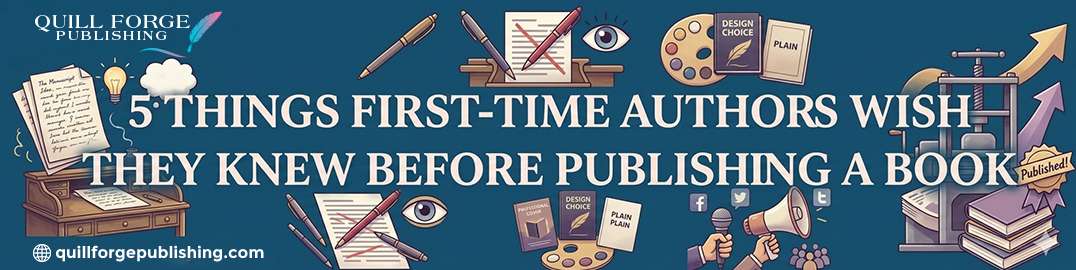
1: Publishing Is Only Half the Battle, Marketing Is the Other Half
The biggest mistake first-time authors make is assuming that publication automatically equals success. In the 2026 publishing landscape, a great book is invisible without a pre-built audience.
What first-time authors wish they knew: Writing and publishing your book doesn’t generate sales through osmosis. Thousands of books are uploaded daily; readers won’t discover yours by accident. Marketing isn’t an "after-the-fact" task—it is essential infrastructure you must build during the writing process.
The 2026 Reality: From Platforms to Micro-Communities
-
Start Early: Building an author platform, email list, and reader relationships takes months, if not years.
-
The New Trend: Successful authors are moving away from broad social media shouting and toward "Micro-Communities." Using platforms like Substack or Discord allows you to build direct, high-trust relationships with your core readers before your launch day.
-
Budgeting: You should budget for marketing as significantly as you do for professional production.
-
The Launch Window: Starting your promotion after publication means losing your most valuable sales momentum.
However, if you are looking for explosive, top-of-funnel awareness, you cannot ignore the power of short-form video. For a deep dive on leveraging social trends, check out How to Use BookTok and Viral Book Promotion to Sell Books.
Smart approaches include:
-
Developing a lead magnet (like a free chapter) to grow an email list early.
-
Engaging with niche communities where your target readers already hang out.
-
Planning coordinated campaigns that peak exactly on your release date.
2: Professional Editing Isn’t Negotiable
First time author publishing tips consistently emphasize that editing matters more than most new authors realize.
What authors mistakenly believe:
Beta readers, writing group feedback, or their own multiple revision passes suffice for editing. Professional editing is an expensive luxury they can skip to save money.
The harsh truth:
Readers notice editing problems immediately. Poor editing generates negative reviews mentioning typos, inconsistencies, and unclear writing. These reviews damage sales permanently and can’t be easily undone.
Amateur editing shows in ways you can’t see because you’re too close to your own work. Professional editors catch problems invisible to authors who’ve read their manuscripts dozens of times.
What experienced authors wish they’d known:
· Professional editing is investment, not expense that improves commercial viability
· Different editing types serve different purposes from developmental to copy editing to proofreading
· Editing costs scale with manuscript length and the condition of your draft
· Skipping editing to save money costs more long-term through poor reviews and lost sales
Publishing advice for beginner writers 2026 emphasizes that editing is one area where cutting corners always backfires.
3: Cover Design Determines Whether Anyone Reads Your Book
Mistakes new authors make frequently involve underestimating cover design’s commercial importance.
Common first-time author assumptions:
Readers will give books chances based on descriptions or reviews regardless of covers. DIY covers or cheap pre-made templates work fine for debut authors. Cover design is subjective personal preference rather than strategic marketing.
Reality check:
Your cover has approximately three seconds to convince browsers to stop and consider your book. In that time frame, covers communicate genre, quality, and whether the book is for them.
Amateur covers signal amateur content regardless of actual writing quality. Readers unconsciously judge books by covers and skip anything that looks self-published in negative ways.
What successful authors learned:
· Professional cover design is essential investment rivaling editing in importance
· Genre conventions matter more than personal taste for commercial success
· Covers must work at thumbnail size where most discovery happens
· Testing covers with target readers provides valuable feedback before committing
Self publishing advice for authors emphasizes that covers are marketing tools first and art second. Design decisions should serve commercial goals rather than personal aesthetic preferences.
4: Distribution and Metadata Are More Complex Than Expected
Tips for new authors publishing their first book must include the reality that technical setup matters far more than most realize. It is the bridge between a finished manuscript and a found book.
What first-time authors don’t anticipate:
Many writers assume uploading a file to a retail site is the final step. In reality, ISBNs, metadata, category selection, and keyword optimization involve technical complexities that can break a launch if handled incorrectly.
The technical reality includes:
-
ISBN Strategy: This affects your long-term flexibility, high-street bookstore availability, and who ultimately "owns" your distribution rights.
-
Metadata Optimization: Every word in your subtitle and description influences how search algorithms categorize and recommend your book to potential readers.
-
Diversified Distribution: Relying solely on one platform can limit your global reach; understanding how to navigate international distribution hubs is key to scaling.
-
Strategic Category Research: Choosing a category isn't about what "vaguely fits"—it's about finding the specific niche where your book can rank in the Top 100 to trigger organic sales.
What experienced authors wish they’d known:
Take the time to understand the technical publishing infrastructure before rushing to upload. Metadata optimization isn't a "set it and forget it" task. You must monitor performance and adjust your keywords and book blurb based on what actually drives discovery and conversions.
5: Timeline and Budget Reality Differs From Expectations
Publishing advice for new writers must include realistic expectations about time and money required.
Common first-time author misconceptions:
Publishing happens quickly once manuscripts are finished. Professional production costs less than it actually does. Marketing budgets aren’t really necessary for debut authors.
The actual timeline includes:
· Professional editing takes 4-8 weeks depending on length and availability
· Cover design requires 2-4 weeks for concepts, revisions, and finalization
· Interior formatting takes 1-2 weeks for quality work across formats
· Pre-launch marketing should start 6-8 weeks before publication minimum
Total timeline from finished manuscript to published book with proper professional production: 3-6 months minimum.
Rushing this process to publish faster compromises quality and reduces launch effectiveness.
The budget reality:
Professional book production requires real investment. Editing represents substantial investment scaling with manuscript length and complexity. Cover design from experienced professionals requires appropriate budgets for quality work.
Marketing budgets for launch campaigns, advertising, and promotional activities often equal or exceed production costs for authors serious about commercial success.
Many first-time authors significantly underestimate total investment required for professional publication and competitive marketing.
What successful authors learned:
· Plan for 6-12 months from manuscript completion to publication
· Budget realistically for professional services across editing, design, and marketing
· Recognize that publishing is business investment requiring capital allocation
· Understand that cheap shortcuts show in final product quality
Tips for first time authors include treating publishing as serious business requiring appropriate time and financial investment rather than hobby pursued on minimal budget.
Why Learning From Others’ Mistakes Saves Time and Money
Every author makes mistakes. The question is whether you make the same mistakes everyone else already made or learn from their experience. The best way to avoid these 5 things first-time authors wish they knew is by following a structured 7-step book publishing plan that ensures every technical and creative detail is handled professionally from the start.
How Quill Forge helps first-time authors avoid common mistakes:
· Comprehensive guidance through the complete publishing process
· Realistic timeline planning preventing rushed decisions
· Budget transparency helping authors allocate resources strategically
· Strategic decision support around distribution, pricing, and marketing
· Professional production ensuring books meet commercial standards
Their experience working with hundreds of first-time authors means they’ve seen every mistake and developed systems preventing them.
Why First Books Shape Long-Term Author Careers
Your first book establishes your author brand and reputation. Poor execution creates problems that affect all future releases.
Long-term considerations:
Negative reviews on first books haunt authors permanently. Readers encountering poorly produced debuts lose confidence in authors’ professionalism. Platform building starts with the first book, making strong launches essential.
Conversely, professional first books create positive momentum:
· Good reviews attract more readers
· Quality production builds trust
· Strong launches establish credibility
· Professional reputation carries to future releases
Your first book is the foundation for everything that follows. Invest appropriately in getting it right.
Start Your Publishing Journey Informed
First-time authors face steep learning curves with mistakes waiting at every turn.
Learning from others’ experience saves time, money, and frustration while improving your book’s chances for success.
The mistakes are predictable. The solutions are established. The question is whether you’ll apply them.
Ready to publish your first book without making common first-time author mistakes?
Book your free consultation with Quill Forge today and start your publishing journey with guidance from professionals who’ve helped hundreds of debut authors navigate the process successfully.
Frequently Asked Questions
1. How long should I expect the publishing process to take?
From completed manuscript to published book, expect 3-6 months minimum with professional editing, design, and pre-launch marketing.
2. What’s the biggest mistake first-time authors make?
Assuming publication equals success without building marketing infrastructure or audience before launch.
3. Do I really need professional editing for my first book?
Yes. Professional editing is non-negotiable for commercial success. Poor editing generates negative reviews that permanently damage sales.
4. How much should I budget for publishing my first book?
Budget for professional editing, cover design, formatting, and marketing. Successful authors invest appropriately for quality production.
5. Should I publish on Amazon only or distribute widely?
Consider your marketing capability and genre. Wide distribution reaches more readers but requires managing multiple platforms.
6. When should I start building my author platform?
Start during the writing process, not after publication. Building audiences takes months and launch windows are most valuable with existing platform.
7. Can I skip marketing if I write a really good book?
No. Quality books without marketing remain undiscovered. Commercial success requires both quality writing and strategic promotion.
8. What’s more important, editing or cover design?
Both are essential. Editing affects reader experience and reviews. Covers determine whether anyone gives your book a chance to begin with.
9. How does Quill Forge help first-time authors specifically?
Quill Forge provides comprehensive guidance preventing common mistakes through professional editing, design, distribution strategy, and marketing support.
10. What should be my first step after finishing my manuscript?
Take a break, then seek professional editing. Don’t rush to publication before your manuscript is truly ready for readers.