Poetry is the most personal genre and the hardest to sell.
You’ve spent years crafting individual poems, refining every line break, perfecting every metaphor. Now you want to publish a collection that represents your voice and vision.
But poetry publishing operates differently from every other genre. Traditional publishers rarely take risks on unknown poets. Print runs are small. Marketing is challenging. And reader expectations have shifted dramatically in recent years.
The good news? Self-publishing has opened doors for poets that simply didn’t exist a decade ago. The challenge is doing it professionally in a market that’s both saturated and underserved.
If you’re serious about publishing poetry in the US in 2026, here’s what you need to know.
Why Poetry Publishing Differs from Other Genres
Poetry collections aren’t novels. They aren’t memoirs. And they definitely aren’t marketed the same way.
Here’s what makes poetry unique:
· Shorter manuscripts (typically 48-80 pages) that require different pricing strategies
· Visual formatting where whitespace and line breaks carry meaning
· Niche audiences that discover books through entirely different channels
· Performance integration where spoken word and social media play larger roles
· Literary credibility that depends heavily on journal publications and awards
Traditional poetry publishing US houses receive thousands of submissions annually and publish maybe 5-10 debut collections. The odds aren’t in your favor.
Self-publishing eliminates gatekeepers but requires you to understand production standards that many poets overlook.
How to Know When Your Collection Is Ready
Most poets rush to publish before their manuscript is truly ready.
A strong poetry collection isn’t just your 60 best individual poems thrown together. It’s a cohesive work with:
· Thematic unity that gives the collection purpose
· Intentional structure with section breaks or narrative progression
· Tonal consistency that creates a unified reading experience
· Strategic ordering where poem placement creates meaning
Before you self-publish a poetry book 2026, get honest feedback from other poets, workshop leaders, or professional editors who specialize in poetry.
One great poem doesn’t make a great collection. You need dozens of strong pieces that work together as a unified artistic statement.
Why Poetry Manuscript Formatting Services Matter
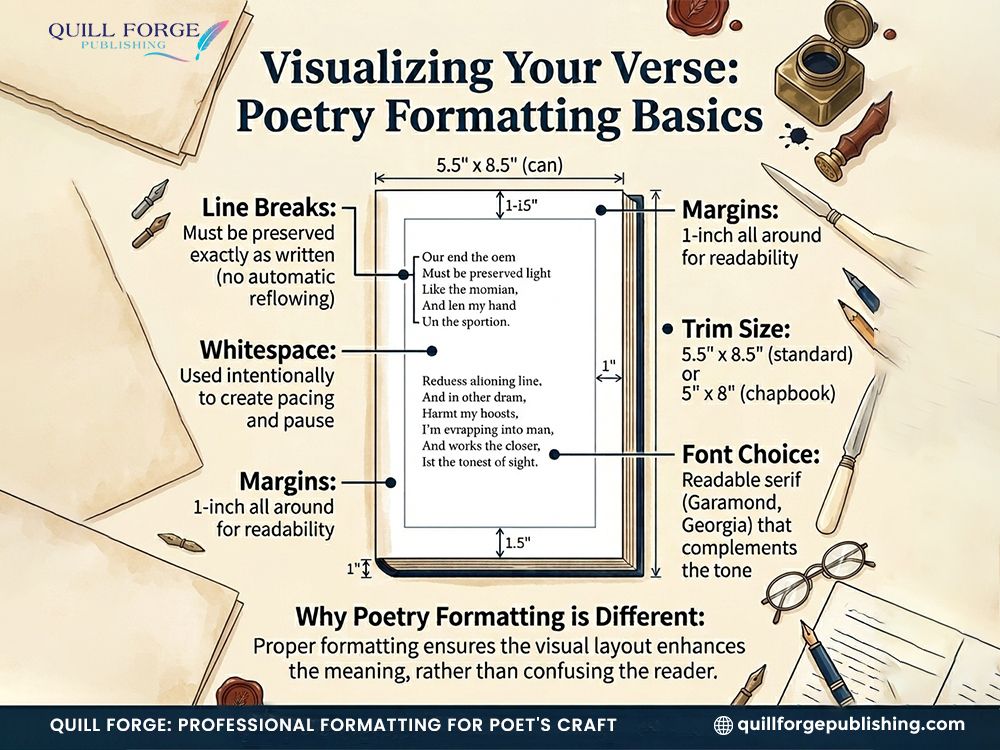
Poetry formatting isn’t like formatting prose. Every space, every indent, every line break matters.
Standard book designers who work primarily with novels often butcher poetry formatting because they don’t understand how visual presentation affects meaning.
Poetry manuscript formatting services ensure:
· Line breaks appear exactly as intended across different trim sizes
· Indentation and spacing match your artistic vision
· Font choices complement rather than distract from your work
· Page turns happen at appropriate moments for pacing
· Whitespace is treated as intentional design element
A professionally formatted poetry collection respects the craft in ways that amateur formatting simply can’t.
How Modern Poetry Publishing Trends US Are Changing the Game
Poetry publishing in 2026 looks dramatically different than it did even five years ago.
Key modern poetry publishing trends US include:
Social media as primary discovery channel. Instagram, TikTok, and Twitter drive more poetry sales than traditional reviews. Poets with strong online presence sell significantly more books.
Performance integration. Slam poetry, open mics, and virtual readings aren’t separate from publishing anymore. They’re essential marketing tools.
Hybrid collections. Blending poetry with visual art, photography, or mixed media creates unique reading experiences that stand out.
Direct reader relationships. Poets who build email lists and engage directly with readers maintain sustainable careers independent of publishers.
The poets succeeding in 2026 understand that publishing the book is just the beginning. Building community around your work is what creates longevity.
Why Marketing Poetry Books 2026 Requires Different Strategies
You can’t market poetry like you market thrillers or business books.
Poetry readers discover books through:
· Literary journals where individual poems first appear
· Recommendations from other poets and writing communities
· Live readings at bookstores, libraries, and literary events
· Social media where poets share excerpts and build followings
· University courses where professors assign contemporary collections
Marketing poetry books 2026 effectively means meeting readers where they already gather rather than trying to force poetry into mainstream book marketing channels.
The poets who succeed combine traditional literary credibility with modern platform building.
How Poetry Book Printing Affects Your Final Product
Poetry collections need different physical specifications than standard books.
Consider:
Trim size. Many poetry books use 5.5 x 8.5 or 6 x 9 rather than standard novel sizes. The format should complement your work’s visual requirements.
Paper quality. Cream paper often works better for poetry than bright white, creating warmth that enhances the reading experience.
Binding. Perfect binding works for longer collections, but some poets prefer saddle-stitch for chapbooks or shorter works.
Cover finish. Matte lamination tends to feel more literary and appropriate for poetry than glossy finishes.
Poetry book printing services that understand these nuances produce final products that feel professional and appropriate for the genre.
Why Poetry Publishing Services in US Include More Than Just Printing
Comprehensive poetry publishing services in the US handle the entire process from manuscript to market.
This includes:
· Editorial feedback on collection structure and individual poem strength
· Professional formatting that respects poetic form and intention
· Cover design that positions your work appropriately within contemporary poetry aesthetics
· ISBN registration and distribution setup for retail availability
· Marketing strategy tailored to how poetry actually reaches readers
Trying to coordinate all these elements yourself while also being the poet creates overwhelming logistical challenges.
US poetry book services exist specifically to handle production and distribution so you can focus on your writing and platform building.
How Quill Forge Supports Poets Through the Publishing Process
Poetry requires specialized knowledge that general publishing services often lack.
Quill Forge’s publishing team understands poetry’s unique requirements, from manuscript formatting to appropriate marketing channels.
Their editing services include poets and literary professionals who provide feedback on collection structure, not just grammar and punctuation.
Their design team creates covers that signal contemporary literary poetry rather than generic self-published aesthetics.
And their distribution infrastructure gets poetry collections into independent bookstores and libraries where poetry readers actually shop.
For poets serious about professional publication, Quill Forge’s poetry-specific expertise makes the difference between an amateur-looking self-published chapbook and a collection that holds its own alongside university press titles.
Why Book Coaching Helps Poets Beyond the Writing
Many poets excel at individual poem craft but struggle with collection-level thinking.
Book coaching services help you:
· Identify thematic threads that unify disparate poems
· Structure your collection for maximum impact
· Understand contemporary poetry market expectations
· Develop realistic publication and career strategies
A good coach doesn’t rewrite your poems. They help you see your own work more clearly and make strategic decisions about what to include, how to order it, and when you’re actually ready to publish.
How Marketing & Publicity Reaches Poetry Readers
Traditional book marketing rarely works for poetry. You need strategies designed specifically for literary audiences.
Marketing & publicity for poetry focuses on:
· Submitting individual poems to literary journals before book publication
· Coordinating readings at bookstores, libraries, and literary festivals
· Building relationships with poetry bloggers and reviewers
· Leveraging social media for excerpt sharing and community engagement
· Applying for awards and grants that provide credibility
These approaches require time and consistent effort. There’s no quick viral hack for poetry success.
But poets who invest in authentic community building create sustainable readership that supports not just one collection, but an entire career.
Start Your Poetry Publishing Journey Professionally
Publishing a poetry collection in 2026 requires understanding both traditional literary values and modern platform-building realities.
You need professional formatting that respects your craft. Distribution that gets your work into appropriate retail channels. And marketing strategies designed for how poetry readers actually discover books.
Self-publishing doesn’t mean doing everything yourself. It means taking control of the process while working with professionals who understand poetry’s unique requirements.
Your voice deserves to be heard. Your collection deserves professional presentation. And your readers deserve a book that honors the care you’ve put into every line.
Ready to publish your poetry collection professionally?
Book your free consultation with Quill Forge today and start your publishing journey with a team that understands poetry publishing from manuscript to market.
Frequently Asked Questions
1. How long should a poetry collection be?
Full-length collections typically run 48-80 pages (roughly 40-70 poems). Chapbooks are shorter, usually 20-30 pages. The length should serve your artistic vision.
2. Do I need to publish individual poems in journals before releasing a collection?
It’s not required, but journal publications build credibility and audience before your book launches. Many successful poets have significant journal credits before their first collection.
3. Should my poetry collection have a theme?
Strong collections usually have thematic or narrative coherence. Random compilations of unrelated poems rarely succeed. Readers want collections that feel intentional and unified.
4. What trim size works best for poetry books?
Common poetry trim sizes include 5.5 x 8.5, 6 x 9, and occasionally 5 x 8. Choose based on your poems’ visual requirements and how line lengths work across the page.
5. Can I include previously published poems in my collection?
Yes, most poetry collections include poems previously published in journals. Some publishers require a certain percentage of new work, but self-publishers face no such restrictions.
6. How do I price a self-published poetry collection?
Poetry pricing is tricky. Research comparable contemporary collections and price competitively within that range to balance accessibility with value.
7. Do poetry collections need ISBNs?
Yes, if you want retail distribution. ISBNs allow bookstores and libraries to order your collection through standard channels.
8. Should I do print-only or also release an ebook?
Most poetry readers prefer physical books, but ebooks expand accessibility. Consider offering both formats to reach the widest possible audience.
9. How important is cover design for poetry?
Extremely important. Your cover signals whether your collection is contemporary literary poetry or amateur self-publishing. Professional design matters.
10. How does Quill Forge help poets specifically?
Quill Forge provides poetry-specific editing, formatting that respects poetic form, design appropriate for contemporary literary aesthetics, and marketing strategies tailored to how poetry actually reaches readers.